






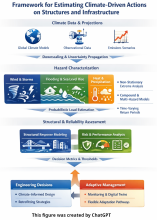
[This lecture was partially created with the support of Artificial Intelligence tools (ChatGPT)]
Introduction
The increasing awareness of climate change and its implications presents unprecedented challenges to the resilience and expected lifetime of engineered structures and infrastructures. Depending on local conditions and data availability, it is not clear whether traditional and well tested design paradigms, based on the assumptions of stationarity of the statistical models describing environmental loads and hazard frequencies, are still reliable in the face of a changing climate.
In fact, Climate change presents significant and growing challenges for the built environment. Impacts such as rising temperatures, altered rainfall patterns, flooding of coastal areas, and degradation of permafrost increasingly affect the performance, safety, and longevity of buildings and infrastructure. Engineers and designers are therefore required not only to adapt designs to future climatic conditions, but also to reduce greenhouse gas (GHG) emissions associated with construction and operation.
Several authors, however, argue that meeting climate change challenges does not require abandoning conventional engineering practice. Instead, it requires systematically embedding sustainable design and climate-conscious decision-making into standard engineering work processes. By doing so, projects can achieve climate change mitigation and adaptation objectives while remaining technically feasible and economically viable (Draper and Attanayake, 2010).
On the technical side, there is increasing need to integrate climate-induced variability and uncertainty into the estimation of actions—including wind loads, wave forces, precipitation intensities, thermal loads, and coupled multi-hazard interactions—that structures must withstand throughout their service life.
Emerging frameworks advocate for a risk-informed, dynamic design approach that accounts for both current climate extremes and plausible future states. This requires extending the concept of design load beyond the assumption of stationarity therefore obtaining design forcing that evolve with projected climate trajectories. The big question is how to do that. Recent scientific contributions and guidelines recommend the use of non-stationary extreme value analysis, where parameters of statistical models are functions of time or relevant climate indices, rather than fixed constants. Such approaches enable the quantification of changing return periods for extreme events—essential for long-lived infrastructure where exposure to future conditions is inevitable. However, the above suggested procedure implies a significant downside: non-stationary models have a larger number of parameters and therefore entail a larger uncertainty of predictions. What if the obtained design load is characterised by large uncertainty?
A key research direction lies in climate model downscaling and uncertainty characterization for engineering applications. Global and regional climate models provide boundary conditions, but their coarse resolution and structural uncertainty necessitate the development of robust downscaling techniques—statistical, dynamical, or hybrid—to generate actionable site-specific projections. Coupling these projections with structural response models remains a frontier area, requiring interdisciplinary collaboration among climate scientists, statisticians, and structural engineers. Efforts to ascribe uncertainty bounds that encompass model variability, emission scenarios, and internal climate variability are critical for credible hazard estimation.
Another emergent theme is the integration of multi-hazard interactions. Climate change can simultaneously influence wind, precipitation, storm surge, and seismic soil conditions, leading to complex loading regimes that are poorly captured by single-hazard models. Research is increasingly focused on developing multi-hazard frameworks that consider correlation structures and cascading effects, as well as on incorporating compound event analysis into reliability assessments. Such methodologies improve the representation of realistic boundary conditions and the potential for coincident extremes.
Adaptive design strategies are also gaining traction. These include performance-based design criteria that allow for planned future modification based on updated climate information, and the use of digital twins and real-time monitoring systems to track evolving environmental loads and structural responses. Machine learning and data assimilation techniques offer promising avenues for continuously refining action estimates from observational data streams, enabling more responsive and resilient infrastructure management.
No-regret design is increasingly invoked to cope with climate change and uncertainty. In environmental engineering it refers to approaches that generate benefits regardless of whether anticipated environmental or climate-related risks fully occur. It is widely used in areas such as climate adaptation, water resources management, and infrastructure planning where future conditions are uncertain. The main principle is to reduce vulnerability while simultaneously delivering immediate environmental, social, or economic advantages. Typical examples include improving energy efficiency, minimizing water losses in distribution systems, and restoring natural ecosystems. One key advantage of no-regret design is that investments remain valuable across a wide range of possible future scenarios. This reduces the likelihood of wasted resources caused by inaccurate forecasts or assumptions. Such designs often increase system resilience and adaptive capacity. They can also produce additional co-benefits, including improved public health, ecosystem services, and biodiversity protection. Another strength of the approach is that it tends to gain stronger public and political support because the short-term benefits are clear. However, no-regret design may sometimes prioritize conservative or incremental solutions over more innovative or transformative options. As a result, strategies with potentially high impact but greater uncertainty may be postponed. Initial implementation costs can still be substantial despite long-term robustness. Furthermore, many benefits, especially social and ecological ones, are difficult to quantify. There is also a risk that measures are labeled as no-regret without sufficient technical or economic justification. Overall, no-regret design represents a cautious yet practical strategy for promoting sustainability in environmental engineering.
Finally, the dissemination of best practices and standardization of methodologies are imperative. While disciplinary bodies have begun issuing guidance on incorporating climate change into load estimations, there remains a need for harmonized international standards that reconcile regional climatic differences with universal engineering principles. Open data frameworks and shared modeling platforms would accelerate innovation, support transparency, and enhance reproducibility in climate-responsive structural assessment.
The estimation of actions on structures and infrastructure in a changing climate is transitioning toward probabilistic, non-stationary, and multi-hazard perspectives underpinned by advanced climate projections and uncertainty quantification.
The role of engineers
Engineering science is a scientific discipline that provides innovative knowledge and methods to support engineering design. It is strictly related to mathematics, physics, biology and chemistry, but involves also specific technical knowledge. It also includes arts, humanities, social sciences, and the professional knowledge and solutions regarding the global challenges for modern society. It is therefore a discipline that has a key role in the context of the climate emergency. Engineering scientists possess interdisciplinary scientific and technical knowledge to propose innovative climate actions to support mitigation of climate change and adaptation to its impacts through enabling new technologies. See, for instance, the description of the Engineering Science and Mechanics programme of the Penn State College of Engineering. Science of climate change is an indispensable support for identifying suitable climate actions and therefore the involvement of the proper expertise is an essential ingredient to success. At the same time, in view of the global dimension of the related problems and the consequent political and media attention, a rigorous and transparent approach is needed with a clear illustration of the related uncertainties.
Engineering is essential to the design of climate change adaptation and in particular the estimation of loads. Engineers possess the technical background that is needed in order to translate model predictions into technical estimation of loads, by taking into account uncertainty and safety factors. Once again, uncertainty assessment plays an essential role for project design, and therefore needs to be carefully taken into account. We would like to remind that engineers bear legal responsibility for their design and therefore procedures need to be carefully considered.
Sustainable Design as a Response to Climate Change
Designing for climate change is fundamentally an extension of sustainable design. Sustainable engineering, procurement, and construction (often referred to as S-EPC) provide a practical framework for addressing both mitigation (reducing emissions) and adaptation (designing for future climate conditions).
Key sustainable design principles relevant to climate change include (Draper and Attanayake, 2010):
- Site master planning and design for ecology;
- Potable water conservation, and minimizing waste water discharges;
- Process design to conserve water, energy and other natural resources;
- Design provisions for phased construction to meet current needs with provisions for meeting future facility requirements;
- provisions for adding sustainable design measures in future phases of construction, if not funded in the initial phase;
- Passive design of facilities to save energy in plant and building operations, e.g. green roofs (vegetated); adequate insulation of building walls, roofs, pipes, ducts and vessels, to minimize fossil-fueled power consumption and emissions, high-efficiency electrical systems including high-performance lighting systems integrated with daylighting and smart controls;
- Onsite renewable energy with energy storage for peak use, meeting the power demand that has been reduced by all of the above concepts, and resulting in reduced fossil fuel demand / emissions;
- Eco-purchasing and contracting: “greening” the supply chain to minimize climate change impacts of the supply chain;
- Managed construction to protect the site’s natural resources, minimize pollution and waste and recycle or salvage surplus materials;
- Neutralizing any additional capital costs by combining “hard” benefits (life-cycle cost savings and returns on investment) with “soft” benefits (intangible but real and significant);
- Protection of ecological systems;
- Life-cycle thinking rather than short-term cost optimization.
Well-established frameworks such as the Hannover Principles, the Principles of Green Engineering, and sustainability tenets in structural design reinforce the idea that integrated system optimization delivers greater environmental and economic benefits than optimizing individual components in isolation .
Importance of the Integrated Design Process
A central concept is the integrated sustainable design team. Traditional project delivery often separates disciplines, leading to fragmented decision-making. In contrast, an integrated team brings together engineers from multiple disciplines, procurement specialists, construction personnel, clients, and operators from the earliest project stages.
This integrated approach:
- Enables cross-disciplinary trade-offs;
- Prevents over-design and redundancy;
- Maximizes energy and water efficiency;
- Reduces greenhouse gas emissions at system level.
Importantly, sustainability is not treated as an “add-on,” but as an embedded requirement within the standard design workflow.
Conceptual Design: The Greatest Opportunity for Impact
The conceptual design phase is identified as the most critical stage for addressing climate change. Decisions made at this stage have the largest influence on long-term environmental performance and the lowest cost of implementation.
During conceptual design, the integrated team should:
- Establish clear sustainability and greenhouse gases (GHG) reduction targets (e.g., percentage reductions relative to baseline designs);
- Select site layout and building orientation to minimize energy loads;
- Preserve natural site features and reduce land disturbance;
- Incorporate passive design strategies such as daylighting and natural ventilation;
- Evaluate renewable energy options and energy-efficient systems.
Preliminary energy modeling, lifecycle cost estimates, and GHG emission calculations are developed at this stage to guide decision-making. These early analyses form benchmarks that are tracked throughout the project lifecycle .
Preliminary Design: Refinement and Optimization
In the preliminary design phase, conceptual ideas are refined into technically robust systems. Energy models become more detailed, emissions estimates are updated, and material choices are evaluated for their embodied carbon content.
Key activities include:
- Right-sizing systems using simulation tools instead of rules of thumb;
- Identifying interactions between building envelope, HVAC, lighting, and process loads;
- Evaluating alternative design solutions to reduce energy demand and emissions;
- Updating lifecycle cost analyses to ensure economic feasibility.
Regular design reviews are conducted to verify that sustainability goals remain achievable as the design evolves .
Detailed Design: From Intent to Specification
During detailed design, sustainability objectives are translated into technical specifications, material requisitions, and procurement criteria. This includes:
- Specifying low-embodied-carbon materials;
- Prioritizing locally sourced materials;
- Including energy and emissions criteria in bid evaluations;
- Developing construction strategies that minimize fuel use, waste, and emissions.
At this stage, final versions of energy models, GHG inventories, and lifecycle cost estimates are completed, providing a clear basis for performance verification during construction and operation .
Construction and Commissioning
The construction phase is not environmentally neutral; it contributes significantly to emissions and resource consumption. It is important:
- Sustainable site planning;
- Minimizing temporary facilities;
- Tracking embodied energy of materials;
- Reviewing design changes for their impact on sustainability goals.
Commissioning plays a critical role in ensuring that energy-efficient and low-emission systems perform as intended during operation. Commissioning activities may begin as early as the design phase and continue through start-up .
Climate sensitive loads
We will refer to the loads that are driven by climate and therefore are sensitive to climate change. In principle, we may consider the following variables and their mutual interaction:
- wind velocity;
- wave frequency and height;
- precipitation frequency, intensity and duration;
- temperature.
We are interested in the whole regime of the above variables and in particular their extremes.
A first issue to consider is that the above variables are sensitive to climate change to a different extent. Also, our knowledge about the impact of climate change on the above variables is subjected to different levels of uncertainty. In general:
- Effect of climate change on temperature is well known. There is a general increase after global warming at all time scales. Increases are not uniformly distributed in space. They are more pronounced in the Northern emisphere and generally more relevant in mountainous regions.
- Understanding evolving wind patterns is essential because they influence weather extremes, renewable energy potential, and climate feedbacks. Climate change is altering wind dynamics by reshaping temperature and pressure gradients that drive atmospheric circulation. Observed shifts include changes in jet stream position, weakening of large-scale winds in some regions, and intensification of extreme wind events in others. These trends complicate climate prediction, as wind responds nonlinearly to warming, sea-ice loss, and land–ocean contrasts. Uncertainty remains high due to limitations in long-term wind observations and model resolution, especially for regional and extreme winds.
- Changing wave climates have major implications for coastal erosion, offshore infrastructure, and marine ecosystems under future warming. Climate change is influencing sea wave dynamics primarily through altered wind patterns, storm tracks, and storm intensity. Evidence suggests regional increases in extreme wave heights, even where mean wave conditions show little change.
Attribution remains challenging because wave trends reflect both local winds and remotely generated swell, linking distant climate processes. Model projections are uncertain, particularly for extremes, due to coarse resolution and limited historical wave observations. - Effect of climate change on precipitation is still poorly understood, for the very local behaviour of convective rainfall, the large range of time scales to be considered and the diversity of associated dynamics (e.g., convective versus large scale frontal perturbations). Evidence suggests that short duration precipitation, which is essentially convective, is increasing in both frequency and intensity, for the higher water retention capacity of the atmosphere and its increased energy. There is no strong evidence regarding precipitation aggregated at monthly and annual time scale and larger. There is no clear and general evidence regarding frequency, intensity and duration of droughts.
Spatial distribution of global risk
An interesting assessment and projection of the global risk associated to climate change for climate related hazard has been presented by the Inform Report 2024 of the European Commission. The reports presented a global map of the INFORM risk index referred to climate change, estimated by following the framework of Figure 1.
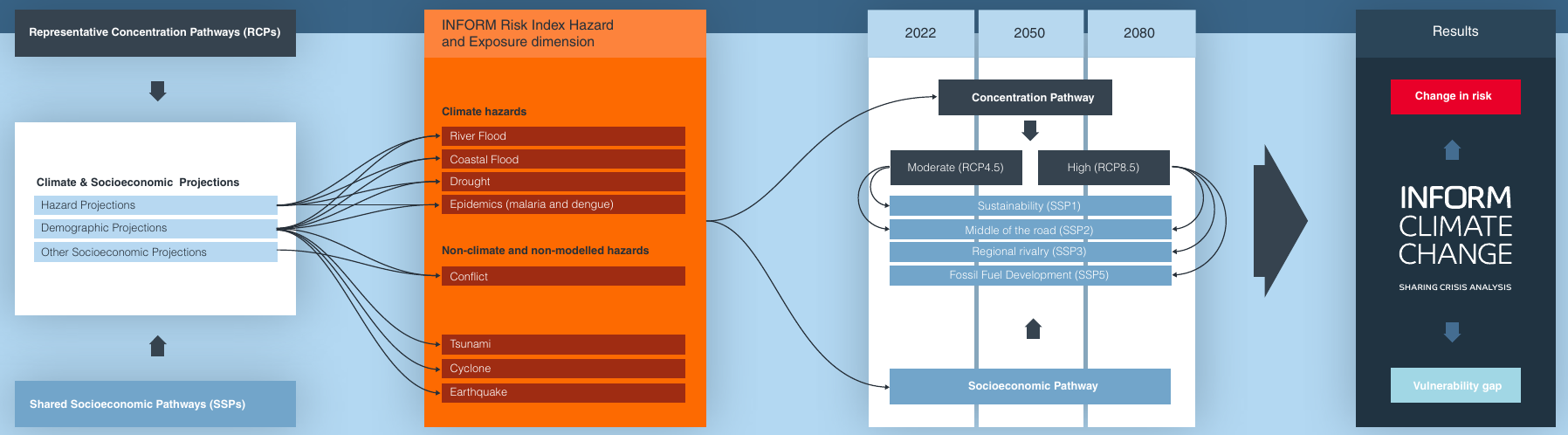
Figure 1. Schematic of estimation of inform climate change index. Source: Inform Report 2024.
The global distribution of the index, presented in Figure 2, confirms large variability. Note that the index takes into account the hazard related to epidemics. Italso considers projections for social dynamics, through projections of demographics and other social variables.
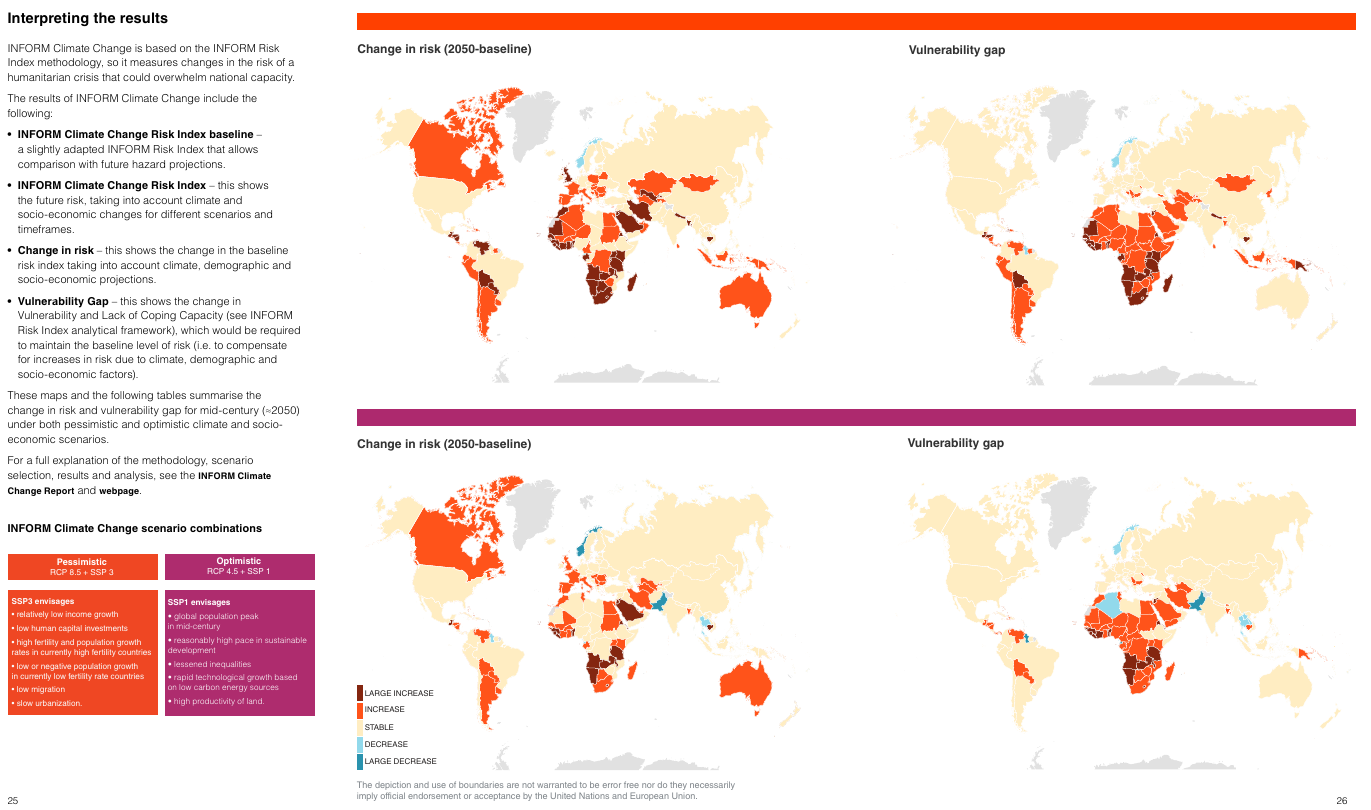
Figure 2. Global distribution of inform climate change index. Source: Inform Report 2024.
It's interesting to look at trends in exposure, which has been estimated in the Inform Report 2024 by using demographic data (population exposure).
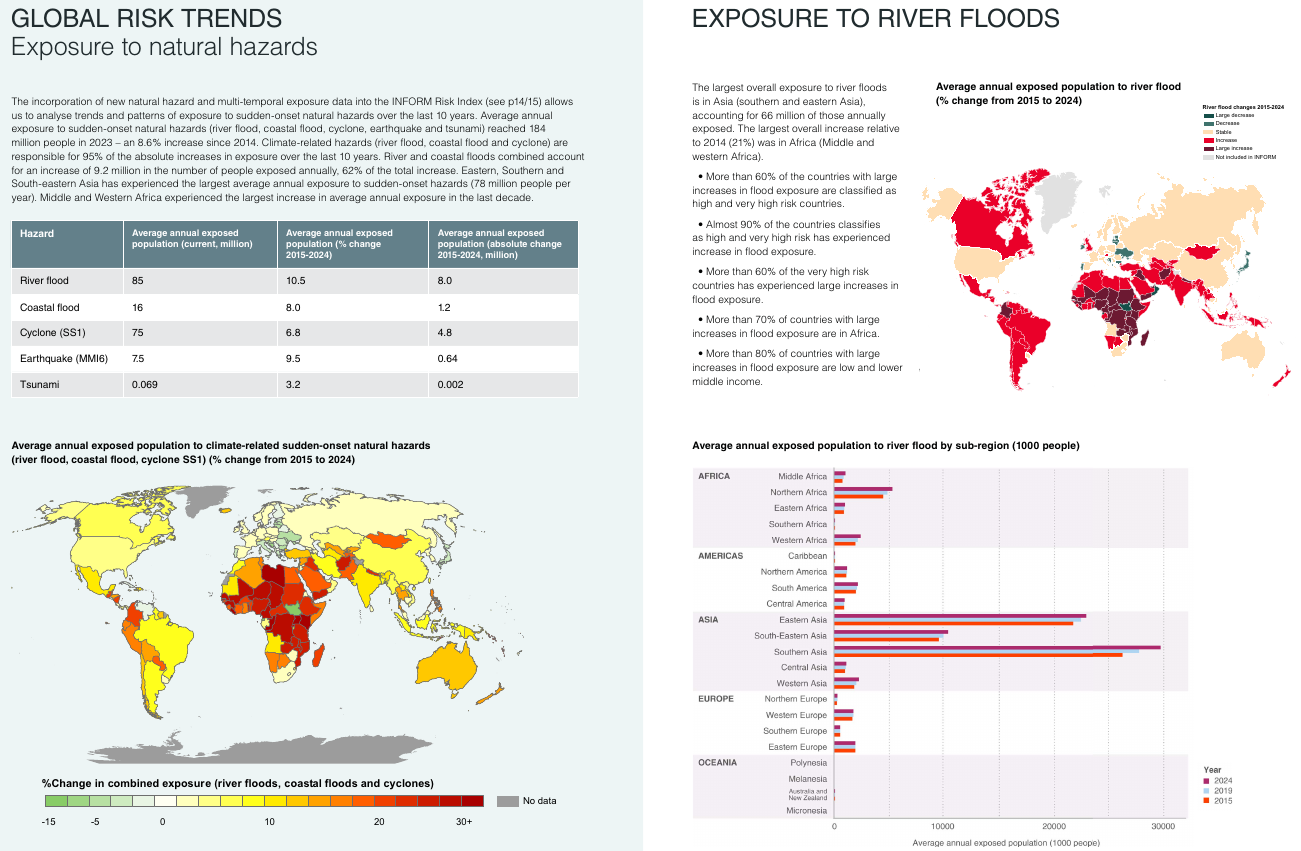
Figure 3. Global trends in exposure estimated by Inform Report 2024 (source).
What approach to estimate loads in the presence of climate change?
Traditionally, load estimation for the above considered variables (temperature, wind, wave and rainfall related variables) is carried out through:
- Code- and standard-based methods (e.g. design wind speeds, pressure coefficients from standards like ASCE, Eurocode);
- Extreme values statistical theory (probably the most used approach);
- Deterministic or stochastic simulation;
- Empirical approaches (now less used).
If the use of codes is recommended or required, the solution is relatively simple, by making references to prescribed or suggested codes and guidelines. In the presence of climate change load estimated may be eventually more severe.
Extreme value theory or extreme value analysis is the study of extremes in statistical distributions. It is widely used in many disciplines, such as structural engineering, finance, actuarial science, economics, earth sciences, traffic prediction, and geological engineering. For example, extreme value theory might be used in the field of hydrology to estimate the probability of an unusually large flooding event. Similarly, for the design of a breakwater, a coastal engineer would seek to estimate the wave for a given return period and design the structure accordingly.
A deterministic simulation is a simulation of a system that is obtained through a deterministic model, namely, a model that establishes a one-to-one relationship between input and output variables. The deterministic model leads to a point prediction which is not associated to any uncertainty assessment. For this reason, often the deterministic simulation is accompanied by uncertainty assessment.
A stochastic simulation is a simulation of a system that has variables that can change stochastically (randomly) with individual probabilities. Realizations of these random variables are generated and inserted into a model of the system. Outputs of the model are recorded, and then the process is repeated with a new set of random values. These steps are repeated until a sufficient amount of data is gathered. In the end, the distribution of the outputs shows the most probable estimates as well as a frame of expectations regarding what ranges of values the variables are more or less likely to fall in (from Wikipedia).
A schematic representing deterministic versus stochastic simulation is given by Figure 4.

Figure 4. Deterministic versus stochastic simulation.
Extreme value theory and stochastic simulation will be discussed in dedicated lectures.
Conclusions and Key Takeaways
Climate-responsive design can be achieved within conventional engineering processes when sustainability is embedded early and monitored consistently. Integrated teamwork, performance-based goals, and lifecycle thinking are essential to achieving meaningful reductions in energy use and greenhouse gas emissions.
Ultimately, designing for climate change is not a constraint on engineering creativity, but an opportunity to deliver higher-value, more resilient, and future-ready infrastructure.
References
Download the powerpoint presentation of this lecture
Last modified on Feb 10, 2026.
- 202 viste